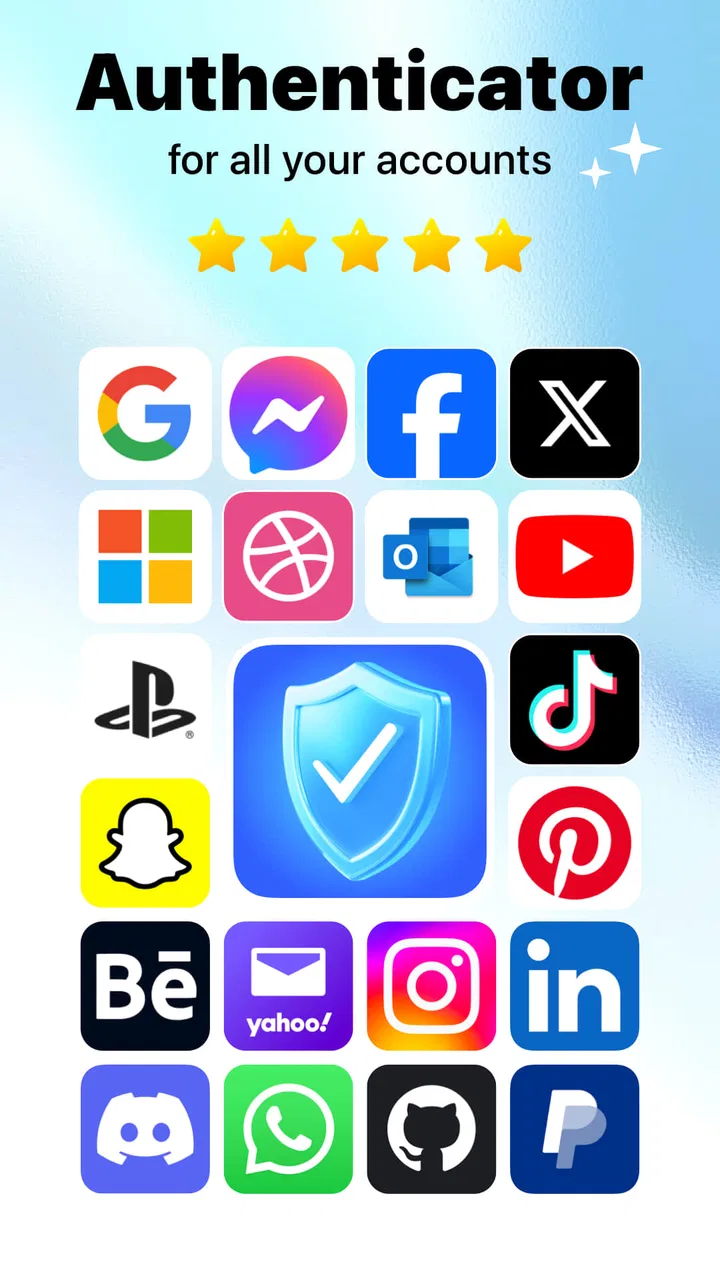
Authenticator - Authkey 2FA
- 3.5
- Rating
- 1.00M
- Installs
- Free
- Price

 Analysis by App-foxy
Two-factor authentication is one of those security habits that feels inconvenient until the day it prevents someone from entering your account. I tested Authenticator - Authkey 2FA as a straightforward tools app from QR Scanner Team, and my overall impression is clear: it is aimed at people who want a focused way to handle verification codes without turning account security into a complicated project. Its appeal is simplicity, but that simplicity also means you should understand what you need before making it your main authenticator.
The app is free to download and is rated for Everyone, which makes it approachable for a wide range of users. It has passed the million-install mark, and its average score sits at 3.5 from roughly 1.7 thousand ratings. Those figures suggest a useful but not universally loved experience. In my view, that is a fair starting point. Authkey 2FA can be practical for everyday sign-ins, but it is not the kind of security tool I would recommend blindly to every person or for every account.
What Authkey 2FA is like in everyday use
I’ll focus on how Authkey 2FA fits into the small, repeated moments when a login asks for extra proof, and on the habits that make those moments less stressful. The key decision is not simply whether a code appears on screen, but whether the app fits your account-recovery routine well enough to trust it when you need access most.
You May Also Like

 Blood Strike: 2.5 Anniversary
Blood Strike’s Loadouts Turn Every Drop Into a Tactical Gamble
A close look at Blood Strike’s custom loadouts: how fast access to signature weapons reshapes its battle royale rhythm, rewards preparation, and narrows the gap between fights.

 Pandora - Music & Podcasts
Pandora’s Music Is Easy to Start, but Harder to Recover
Pandora’s strength is its low-effort path from a seed to a station. Its weak spot is how much confidence it asks you to place in connection, setup, and quiet recovery.

 8 Ball Pool
 Is Built on Rivalries, Rematches, and Routine
A close look at the rivalries, rematches, shared routines, and unanswered safety questions that turn a quick pool match into a persistent mobile community.

 Samsung Music
’s Quiet Strength Is Playing What You Already Own
Its reach comes less from spectacle than from dependable access to a personal library. That simplicity is both the app’s strongest retention engine and its ceiling.

 AccuWeather: Weather Radar
AccuWeather Review: A Quick, Clear Forecast for Everyday Decisions
For everyday plans, the best forecast is the one you can understand quickly. AccuWeather makes rain timing, radar, and local conditions easy to act on, with a few trade-offs.

 Hill Climb Racing
Why Hill Climb Racing Still Turns Crashes Into One More Run
A tiny car, a bumpy hill and one more upgrade: Hill Climb Racing keeps resurfacing because its simple chaos makes every near-miss feel personal.
More From Our News Desk



A focused approach to verification codes
The main job here is familiar: an account asks for a temporary verification code, and the authenticator gives you that code after you have connected the account. The app’s short store description is simply “Authenticator,” and that modest wording matches the experience I expected. It is not presented as a broad password manager, a social app, or a general privacy suite. Its purpose is to sit alongside your accounts and provide an extra step during login.
That narrow focus is a strength when you are tired of apps that bury important actions under unrelated features. For a person setting up protection on an email account, shopping account, work service, or social profile, the useful workflow is usually short: open the service’s security settings, choose two-step verification, scan the displayed QR code, and return to the authenticator whenever a code is requested. Keeping that process separate from the account itself makes the routine easier to understand.
I also like the fact that an authenticator encourages a better security habit than relying only on a password. A stolen or reused password can be enough to expose an account, while a time-based code adds another barrier. Of course, the app does not make a weak password strong, and it cannot protect an account if someone willingly gives away both the password and the code. It is one layer, not a complete security plan.
The setup moment deserves care
The most important part of using Authkey 2FA is not opening it every day; it is the initial setup. When a service shows a QR code, I would keep the account’s recovery information nearby before scanning anything. Many services provide backup codes or another recovery method during enrollment. I would save those somewhere safe before closing the setup screen, because losing access to the authenticator can otherwise turn a simple login problem into an account-recovery problem.
A useful practical tip is to avoid scanning every account in a rushed session. I would add one account, sign out or open a separate private session where appropriate, and confirm that the generated code works before moving to the next service. This catches mistakes early. If a code fails, checking the device’s time settings is a sensible first step, since time-based verification depends on accurate time. That is a small detail, but it is one of the most common sources of confusion with authenticator apps.
Another good habit is to label entries clearly while setting them up. If two accounts use the same service, vague labels can make it difficult to know which code belongs where. A careful label saves time later, especially when you are signing in under pressure. This is the sort of everyday improvement that does not appear in a short store summary but makes an authenticator much easier to live with.
Where the app fits among familiar alternatives
Authkey 2FA competes with the authenticator tools people already know, including built-in options from major account providers and more established standalone apps. The usual alternatives may offer a more familiar interface, broader recovery guidance, or a longer track record in a user’s own security routine. If you already have a trusted authenticator that works reliably across your accounts, switching only makes sense if Authkey 2FA solves a specific problem for you.
Its likely advantage is concentration. Someone who wants a separate tool rather than a feature tied to a particular ecosystem may appreciate that distinction. A dedicated authenticator can also make it easier to think of verification codes as a separate security responsibility instead of something hidden inside an email or password application. On the other hand, users who value seamless synchronization between devices may prefer an alternative that clearly fits into their existing account ecosystem.
This comparison matters because moving codes is not a casual change. Before replacing an existing authenticator, I would check how each service supports re-enrollment and recovery. I would never delete the old entries first. The safer sequence is to add the new authenticator, test it, retain recovery options, and only then remove the previous setup. That trade-off makes Authkey 2FA more suitable for a new security setup than for an impulsive migration.
What the developer and current release tell me
Authkey 2FA comes from QR Scanner Team and was released on July 31, 2024. The current version is 1.1.5, and it supports devices running Android 6.0 or later. That broad operating-system support is helpful for people using older Android hardware, although compatibility alone does not tell me how well the app fits every phone or manufacturer interface.
The app has 48 written reviews alongside its wider rating count, so I would treat the public reception as useful but limited evidence rather than a final verdict. A 3.5 average points to mixed experiences. In practical terms, that means I would install it and test one non-critical account first instead of immediately moving every important login into it.
The free entry point is attractive, particularly for someone protecting a handful of accounts. There are also in-app purchases ranging from $4.99 to $49.99 per item. Because those purchases can vary in size, I would pay attention to the screens shown during use and make sure I understand which functions are available without payment before building my whole security workflow around the app. For a basic authenticator, unexpected purchase prompts can create unnecessary hesitation, so transparency matters.
The strongest reason to use it
The best case for Authkey 2FA is a person who wants a dedicated verification-code tool and is willing to manage the setup responsibly. If your accounts already support QR-based two-step verification and you prefer keeping codes outside your main password app, this app can be a sensible addition. It gives the security step its own place on the phone, which can make the routine more visible and easier to remember.
I can also see it helping someone who is gradually improving account security. Instead of trying to secure everything in one evening, you can start with the email account that controls password resets, then protect financial and work-related services, and continue from there. The important insight is to prioritize the account that can unlock other accounts. Protecting a low-value profile first may feel productive, but securing the recovery hub usually has greater practical value.
For families or less technical users, the simple concept may be easier to explain than a larger security application. I would still help with the first setup and recovery plan rather than handing over the phone and assuming everything is finished. The app can display codes, but the user still needs to know why the code is requested, where recovery information is stored, and what to do after changing phones.
The meaningful weakness: convenience depends on your recovery plan
My main reservation is not the idea of an authenticator; it is the friction that appears when a phone is lost, replaced, reset, or unavailable. A code generator is useful only when you can reach the device and the account entry. That makes backup planning essential. If you install Authkey 2FA and then forget about recovery codes, you may have created a new point of failure while trying to improve security.
This is also where some competing solutions may be a better fit. If you regularly use several devices, travel without your primary phone, or need a carefully managed migration process, look for an authenticator whose recovery and multi-device workflow you already understand. I would not choose any app solely because it is free or has a simple screen. For high-value accounts, the ability to recover safely can matter more than the first setup.
There is another practical limitation: a separate authenticator adds one more app to your daily security routine. That is not a flaw unique to Authkey 2FA, but it can still affect consistency. If the app is buried in a folder, the extra login step may feel annoying. I recommend placing it somewhere easy to reach and practicing the process once after setup. Familiarity reduces the chance of making a mistake when you are locked out or signing in from a new device.
I would also avoid treating the generated code as something that can be shared with support staff, friends, or messages claiming to be from a service. Legitimate support processes should not require you to disclose a current verification code to another person. The app can help create a stronger login barrier, but it cannot stop social engineering if the user hands over the code.
Who should install it?
Authkey 2FA is a reasonable choice for Android users who want a dedicated, free starting point for two-step verification and who are comfortable taking responsibility for recovery. It suits people securing a small or moderate number of accounts, especially those who prefer not to combine codes with a password manager or a provider-specific security tool.
It is also a good learning tool for someone moving beyond password-only logins. The workflow is concrete: enroll an account, confirm the code, store recovery information, and use the app when prompted. That makes the benefits of two-factor authentication easier to understand than abstract security advice.
I would be more cautious about recommending it as the sole solution for someone with many critical accounts, frequent device changes, or a strong need for synchronized access across multiple devices. Those users should compare recovery and migration details carefully with established alternatives. They may value a more mature ecosystem even if the interface is less focused.
Likewise, people who rarely update their phone or who use a device below Android 6.0 should not assume the app will be suitable. The operating-system requirement is clear enough to check before installation. For everyone else, the sensible approach is to try it with one account that matters but is not impossible to recover, then judge the daily experience before expanding its role.
A realistic account-security routine
Imagine you are setting up protection for your primary email account on a Sunday afternoon. I would first open the email provider’s security page, enable its two-step option, and keep the recovery codes in a secure offline location. I would scan the QR code with Authkey 2FA, enter the current code to confirm enrollment, and then test the next sign-in while the old session is still available. Only after that would I add banking, work, or social accounts.
When adding each service, I would record the account label and recovery method in a private, organized place. I would not take ordinary screenshots of sensitive setup material and leave them in the phone gallery. If the service offers a way to reconfigure two-step verification, I would learn where that setting is before an emergency occurs. This workflow turns the app from a code viewer into one part of a dependable security plan.
After changing phones, I would keep the old device available until every important account works on the new one. That single rule prevents a surprisingly stressful transition. If an account cannot be transferred directly, its recovery codes or account settings may be the route back in. Authkey 2FA is most useful when paired with this kind of preparation, not when installed as a last-minute response to a suspicious login.
My final view after weighing the trade-offs
Authkey 2FA makes sense as a focused tools app for people who want an uncomplicated place to generate account verification codes. Its free access, Everyone rating, Android 6.0 support, and dedicated purpose make it approachable. The million-plus installs show that it has reached a substantial audience, while the 3.5 average and limited written feedback encourage a measured approach rather than automatic trust.
My recommendation is to use it deliberately, not casually. Start with one account, confirm that the code process works, save recovery information safely, and only then decide whether it deserves a larger role. That advice applies especially because in-app purchases range from $4.99 to $49.99 per item; understand the app’s payment prompts before assuming every part of your preferred workflow is included at no cost.
I would recommend Authkey 2FA to a reader who wants a separate authenticator and is prepared to manage backups. I would point a multi-device power user toward a more established alternative if recovery and synchronization are the deciding factors. In the end, the app’s strongest quality is its clear purpose, while its biggest weakness is that the surrounding security responsibilities remain firmly with you. Used with a recovery plan, it can be a practical step toward safer account access; used without one, it may only move the inconvenience to a later and more stressful moment.
FAQs for Authenticator - Authkey 2FA
01What is Authenticator - Authkey 2FA used for?
Authenticator - Authkey 2FA is designed to add an extra layer of security to online accounts. It generates temporary verification codes, usually six-digit numbers, that you enter after your password when signing in. The app can be useful for protecting email, social media, banking, gaming, and other services that support time-based two-factor authentication, commonly known as TOTP.
02How do I set up an account with Authenticator - Authkey 2FA?
To set up an account, open the service’s security settings and choose the option to enable an authenticator app. Scan the displayed QR code with Authenticator - Authkey 2FA, or enter the setup key manually if scanning is unavailable. The app then generates changing codes. Enter the current code on the service’s setup screen to complete and confirm the connection.
03Does Authenticator - Authkey 2FA require an internet connection?
In most cases, the app can generate verification codes without an active internet connection because the codes are based on a time-based algorithm stored on the device. However, your phone’s date and time should be set correctly, preferably automatically, because an incorrect clock can cause codes to be rejected. Internet access may still be needed when downloading the app, syncing optional features, or managing account settings.
04What happens if I lose my phone or delete the Authenticator app?
Losing your phone or removing the app can make it difficult to access accounts protected by two-factor authentication, especially if your codes are not backed up. Before relying on the app, save each service’s recovery codes in a secure location and check whether the app offers encrypted backup or transfer options. If you lose access, use the account provider’s recovery process rather than repeatedly guessing codes.
05Is Authenticator - Authkey 2FA safe to use, and what should I check before downloading?
An authenticator app can significantly improve account security, but its safety also depends on how it stores and handles your secret keys. Before downloading, review the developer information, privacy policy, permissions, backup behavior, and whether sensitive data is encrypted. Avoid sharing setup QR codes or secret keys, enable device security such as a passcode or biometrics, and download only from an official app store.
Pros
- Supports secure two-factor authentication for compatible accounts.
- Generates verification codes without requiring a constant internet connection.
- Simple interface makes adding and managing accounts relatively straightforward.
- Can help protect accounts even if a password has been exposed.
- Useful for users who want an alternative to SMS-based verification.
Cons
- Losing the device may complicate account recovery without backup options.
- Not every online service supports the same authentication setup process.
- Moving accounts to a new phone may require manual transfer or reconfiguration.
- Some users may find repeated code entry inconvenient during frequent logins.
- The app’s security depends partly on protecting the phone and app access.

Authenticator - Authkey 2FA
Gallery